Análisis del procesamiento de las expresiones faciales emocionales a través de la película La pasión de Juana de Arco (1928): un estudio de caso en neurociencias
DOI:
https://doi.org/10.11565/arsmed.v51i1.2167Palabras clave:
cine, cara, depresión, emoción expresada, esquizofrenia, procesamiento de emociones facialesResumen
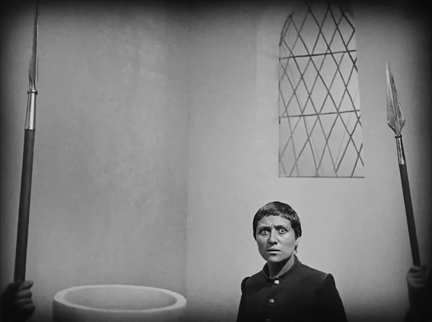
El rostro es un vehículo de la emoción por medio de las expresiones faciales, elementos de gran relevancia en las interacciones humanas. Dichas expresiones parecen tener una función social al aportar información para las inferencias que hacemos sobre el estado interno de los demás; a su vez, pueden generar empatía en el observador. Su interpretación ocurre rápidamente en varias áreas cerebrales, como el área facial fusiforme, el giro temporal medio y la amígdala, a la vez que está influenciada por el contexto. Tanto la percepción como la interpretación pueden verse alterados en algunos trastornos psiquiátricos y lesiones cerebrales. Considerando el aprovechamiento que el cine hace del rostro —e incluso la manipulación del contexto a través del montaje—, algunos filmes suponen potenciales herramientas para la evaluación y la intervención de estos déficits, lo que llama a su exploración dentro de contextos de investigación. Un ejemplo único de estudio es la obra La pasión de Juana de Arco (1928), que narra el juicio de condena y ejecución de Juana de Arco. Su director, el danés Carl Theodor Dreyer, enfatizó la importancia del rostro como un vehículo de la emoción humana, particularmente a través del uso de herramientas técnicas, como el primer plano que domina el filme y con el que se acentúan y distorsionan los rasgos faciales de los intérpretes. Así, se consolida el fuerte impacto emocional de la película, amplificado por el opresivo entorno generado gracias a técnicas expresionistas, como los movimientos de cámara o la puesta en escena.
Descargas
Citas
Almeida, J., Vilaça, L., Teixeira, I. N., & Viana, P. (2021). Emotion identification in movies through facial expression recognition. Applied Sciences, 11(15), 6827. https://doi.org/10.3390/app11156827 DOI: https://doi.org/10.3390/app11156827
Barrett, L. F., Mesquita, B., & Gendron, M. (2011). Context in emotion perception. Current Directions in Psychological Science, 20(5), 286–290. https://doi.org/10.1177/0963721411422522 DOI: https://doi.org/10.1177/0963721411422522
Bordwell, D. (1981). The films of Carl-Theodor Dreyer. University of California Press. DOI: https://doi.org/10.2307/1772073
Cutting, J. E., & Armstrong, K. L. (2016). Facial expression, size, and clutter: Inferences from movie structure to emotion judgments and back. Attention, Perception, & Psychophysics, 78(3), 891–901. https://doi.org/10.3758/s13414-015-1003-5 DOI: https://doi.org/10.3758/s13414-015-1003-5
Del Vecchio, M., Avanzini, P., Gerbella, M., Costa, S., Zauli, F. M., d’Orio, P., Focacci, E., Sartori, I., & Caruana, F. (2024). Anatomo-functional basis of emotional and motor resonance elicited by facial expressions. Brain, 147(9), 3018–3031. https://doi.org/10.1093/brain/awae050 DOI: https://doi.org/10.1093/brain/awae050
Doane, M. A. (2003). The close-up: Scale and detail in the cinema. differences: A Journal of Feminist Cultural Studies, 14(3), 89–111. https://doi.org/10.1215/10407391-14-3-89 DOI: https://doi.org/10.1215/10407391-14-3-89
d’Orsi, G., & Tinuper, P. (2006). “I heard voices…”: From semiology, a historical review, and a new hypothesis on the presumed epilepsy of Joan of Arc. Epilepsy & Behavior, 9(1), 152–157. https://doi.org/10.1016/j.yebeh.2006.04.020 DOI: https://doi.org/10.1016/j.yebeh.2006.04.020
Ekman, P., Friesen, W. V., & Ellsworth, P. (1972). Emotion in the human face: Guidelines for research and an integration of findings. Pergamon Press.
Fridlund, A. J., & Russell, J. A. (2024). Evolution, emotion, and facial behavior: A 21st-century view. In L. AlShawaf & T. K. Shackelford (Eds.), The Oxford handbook of evolution and the emotions (pp. 55–78). Oxford University Press. https://doi.org/10.1093/oxfordhb/9780197544754.013.3 DOI: https://doi.org/10.1093/oxfordhb/9780197544754.013.3
Gao, Z., Zhao, W., Liu, S., Liu, Z., Yang, C., & Xu, Y. (2021). Facial emotion recognition in schizophrenia. Frontiers in Psychiatry, 12, 633717. https://doi.org/10.3389/fpsyt.2021.633717 DOI: https://doi.org/10.3389/fpsyt.2021.633717
Gubern, R. (2016). Historia del cine. Anagrama.
Gupta, T., Osborne, K. J., Nadig, A., Haase, C. M., & Mittal, V. A. (2023). Alterations in facial expressions in individuals at risk for psychosis: A facial electromyography approach using emotionally evocative film clips. Psychological Medicine, 53(12), 5829–5838. https://doi.org/10.1017/S0033291722003087 DOI: https://doi.org/10.1017/S0033291722003087
Harris, J. C. (2013). Joan of Arc. JAMA Psychiatry, 70(1), 6–7. https://doi.org/10.1001/jamapsychiatry.2013.816 DOI: https://doi.org/10.1001/jamapsychiatry.2013.816
Juckel, G., Mergl, R., Präßl, A., Mavrogiorgou, P., Witthaus, H., Möller, H. J., & Hegerl, U. (2008). Kinematic analysis of facial behaviour in patients with schizophrenia under emotional stimulation by films with “Mr. Bean”. European Archives of Psychiatry and Clinical Neuroscience, 258(3), 186–191. https://doi.org/10.1007/s00406-007-0778-3 DOI: https://doi.org/10.1007/s00406-007-0778-3
Kret, M. E., Roelofs, K., Stekelenburg, J. J., & de Gelder, B. (2013). Emotional signals from faces, bodies and scenes influence observers’ face expressions, fixations and pupil size. Frontiers in Human Neuroscience, 7, 810. https://doi.org/10.3389/fnhum.2013.00810 DOI: https://doi.org/10.3389/fnhum.2013.00810
Larson, S. (2017). Risen from the ashes: The complex print history of Carl Dreyer’s The Passion of Joan of Arc (1928). The Moving Image, 17(1), 52–84. https://doi.org/10.5749/movingimage.17.1.0052 DOI: https://doi.org/10.5749/movingimage.17.1.0052
Lee, J., Gosselin, F., Wynn, J. K., & Green, M. F. (2011). How do schizophrenia patients use visual information to decode facial emotion? Schizophrenia Bulletin, 37(5), 1001–1008. https://doi.org/10.1093/schbul/sbq006 DOI: https://doi.org/10.1093/schbul/sbq006
Matsumoto, D., Keltner, D., Shiota, M. N., O’Sullivan, M., & Frank, M. (2008). Facial expressions of emotion. In M. Lewis, J. M. Haviland-Jones, & L. F. Barrett (Eds.), Handbook of emotions (pp. 211–234). The Guilford Press.
Meineck, P. (2011). The neuroscience of the tragic mask. Arion: A Journal of Humanities and the Classics, 19(1), 113–158. https://doi.org/10.1353/arn.2011.0024 DOI: https://doi.org/10.1353/arn.2011.0024
Mobbs, D., Weiskopf, N., Lau, H. C., Featherstone, E., Dolan, R. J., & Frith, C. D. (2006). The Kuleshov effect: The influence of contextual framing on emotional attributions. Social Cognitive and Affective Neuroscience, 1(2), 95–106. https://doi.org/10.1093/scan/nsl014 DOI: https://doi.org/10.1093/scan/nsl014
Muhammed, L. (2013). A retrospective diagnosis of epilepsy in three historical figures: St. Paul, Joan of Arc and Socrates. Journal of Medical Biography, 21(4), 208–211. https://doi.org/10.1177/0967772013479757 DOI: https://doi.org/10.1177/0967772013479757
Muros, N. I., García, A. S., Forner, C., López-Arcas, P., Lahera, G., Rodriguez-Jimenez, R., Nieto, K. N., Latorre, J. M., Fernández-Caballero, A., & Fernández-Sotos, P. (2021). Facial affect recognition by patients with schizophrenia using human avatars. Journal of Clinical Medicine, 10(9), 1904. https://doi.org/10.3390/jcm10091904 DOI: https://doi.org/10.3390/jcm10091904
Nicastro, N., & Picard, F. (2016). Joan of Arc: Sanctity, witchcraft or epilepsy? Epilepsy & Behavior, 57(Pt B), 247–250. https://doi.org/10.1016/j.yebeh.2015.12.043 DOI: https://doi.org/10.1016/j.yebeh.2015.12.043
Sabatinelli, D., Fortune, E. E., Li, Q., Siddiqui, A., Krafft, C., Oliver, W. T., Beck, S., & Jeffries, J. (2011). Emotional perception: Meta-analyses of face and natural scene processing. NeuroImage, 54(3), 2524–2533. https://doi.org/10.1016/j.neuroimage.2010.10.011 DOI: https://doi.org/10.1016/j.neuroimage.2010.10.011
Sacilotto, E., Salvato, G., Villa, F., Salvi, F., & Bottini, G. (2022). Through the looking glass: A scoping review of cinema and video therapy. Frontiers in Psychology, 12, 732246. https://doi.org/10.3389/fpsyg.2021.732246 DOI: https://doi.org/10.3389/fpsyg.2021.732246
Schaefer, A., Nils, F., Sanchez, X., & Philippot, P. (2010). Assessing the effectiveness of a large database of emotion-eliciting films: A new tool for emotion researchers. Cognition and Emotion, 24(7), 1153–1172. https://doi.org/10.1080/02699930903274322 DOI: https://doi.org/10.1080/02699930903274322
Schildkrout, B. (2023). What caused Joan of Arc’s neuropsychiatric symptoms? Medical hypotheses from 1882 to 2016. Journal of the History of the Neurosciences, 32(3), 332–356. https://doi.org/10.1080/0964704X.2023.2171799 DOI: https://doi.org/10.1080/0964704X.2023.2171799
Schirmer, A., & Adolphs, R. (2017). Emotion perception from face, voice, and touch: Comparisons and convergence. Trends in Cognitive Sciences, 21(3), 216–228. https://doi.org/10.1016/j.tics.2017.01.001 DOI: https://doi.org/10.1016/j.tics.2017.01.001
Schrader, P. (2018). Transcendental style in film: Ozu, Bresson, Dreyer (Edición revisada). University of California Press. DOI: https://doi.org/10.1525/9780520969148
Schyns, P. G., Petro, L. S., & Smith, M. L. (2009). Transmission of facial expressions of emotion coevolved with their efficient decoding in the brain: Behavioral and brain evidence. PLOS ONE, 4(5), e5625. https://doi.org/10.1371/journal.pone.0005625 DOI: https://doi.org/10.1371/journal.pone.0005625
Sevos, J., Grosselin, A., Gauthier, M., Carmona, F., Gay, A., & Massoubre, C. (2018). Cinemotion, a program of cognitive remediation to improve the recognition and expression of facial emotions in schizophrenia: A pilot study. Frontiers in Psychiatry, 9, 312. https://doi.org/10.3389/fpsyt.2018.00312 DOI: https://doi.org/10.3389/fpsyt.2018.00312
Sun, S., Yu, H., Yu, R., & Wang, S. (2023). Functional connectivity between the amygdala and prefrontal cortex underlies processing of emotion ambiguity. Translational Psychiatry, 13(1), 334. https://doi.org/10.1038/s41398-023-02625-w DOI: https://doi.org/10.1038/s41398-023-02625-w
van Heijst, K., Kret, M. E., & Ploeger, A. (2025). Basic emotions or constructed emotions: Insights from taking an evolutionary perspective. Perspectives on Psychological Science, 20(3), 377–391. https://doi.org/10.1177/17456916231205186 DOI: https://doi.org/10.1177/17456916231205186
Wang, S., Tudusciuc, O., Mamelak, A. N., Ross, I. B., Adolphs, R., & Rutishauser, U. (2014). Neurons in the human amygdala selective for perceived emotion. Proceedings of the National Academy of Sciences of the United States of America, 111(30), E3110–E3119. https://doi.org/10.1073/pnas.1323342111 DOI: https://doi.org/10.1073/pnas.1323342111
Weidner, E. M., Schindler, S., Grewe, P., Moratti, S., Bien, C. G., & Kissler, J. (2022). Emotion and attention in face processing: Complementary evidence from surface event-related potentials and intracranial amygdala recordings. Biological Psychology, 173, 108399. https://doi.org/10.1016/j.biopsycho.2022.108399 DOI: https://doi.org/10.1016/j.biopsycho.2022.108399
Willis, M. L., Palermo, R., McGrillen, K., & Miller, L. (2014). The nature of facial expression recognition deficits following orbitofrontal cortex damage. Neuropsychology, 28(4), 613–623. https://doi.org/10.1037/neu0000059 DOI: https://doi.org/10.1037/neu0000059
Winkler, M. M. (2002). The face of tragedy: From theatrical mask to cinematic close-up. Mouseion: Journal of the Classical Association of Canada, 2(1), 43–70. https://doi.org/10.1353/mou.2002.0000 DOI: https://doi.org/10.1353/mou.2002.0000
Xu, P., Peng, S., Luo, Y. J., & Gong, G. (2021). Facial expression recognition: A meta-analytic review of theoretical models and neuroimaging evidence. Neuroscience & Biobehavioral Reviews, 127, 820–836. https://doi.org/10.1016/j.neubiorev.2021.05.023 DOI: https://doi.org/10.1016/j.neubiorev.2021.05.023
Zhao, K., Liu, M., Gu, J., Mo, F., Fu, X., & Hong Liu, C. (2020). The preponderant role of fusiform face area for the facial expression confusion effect: An MEG study. Neuroscience, 433, 42–52. https://doi.org/10.1016/j.neuroscience.2020.03.001 DOI: https://doi.org/10.1016/j.neuroscience.2020.03.001
Descargas
Publicado
Cómo citar
Número
Sección
Licencia
Derechos de autor 2026 José Eduardo López-Villa

Esta obra está bajo una licencia internacional Creative Commons Atribución-CompartirIgual 4.0.
Los autores/as conservan sus derechos de autor y garantizan a la revista el derecho de primera publicación de su obra, la que estará simultáneamente sujeta a la Licencia CC BY-SA 4.0 (Ver declaración de Acceso Abierto).




 Español
  English